2015年9月30日星期三

International Journal of Immunology

International Journal of Immunology
ISSN Print: 2329-177X
ISSN Online: 2329-1753

International Journal of Immunology (IJI) is serving the needs of the immunology community worldwide with objective enthusiasm. It plays an essential role in monitoring advances in the various fields of immunology, bringing together the results in a readable and lucid form. Together with the other sections of the journal they give the reader a complete picture of the diverse field of immunology. This broad perspective makes Trends in Immunology an invaluable information source for researchers, lecturers and students alike.
International Journal of Immunology is a peer-reviewed, international, open-access journal that publishes original research articles as well as review articles dealing with all aspects of research on immunology. Subject areas may include, but are not limited to the following fields:
Antigen processing
Cellular immune response
Immunity to infection
Immunomodulation
Innate immunity
Molecular immunology
Leukocyte signalling
Clinical immunology
New technology
Read this journal for free:http://bit.ly/1PMR3Cp

2015年9月29日星期二

Share video:Mantis shrimp fight with shockwave-producing appendage


By David Shultz 23 September 2015 

Any animal with a body part called a “raptorial appendage” should probably be taken seriously. Most mantis shrimp (Neogonodactylus bredini) never grow to more than a few inches long, but their rounded claws strike so fast they can deliver shockwave-producing blows that crack apart hard-shelled prey like clams and crabs. A new study reveals the shrimp even use this weapon on each other. To set up some conflict, researchers placed two mantis shrimp of the same sex, separated by an opaque barrier, into a small tank. One shrimp was provided with a small tube that simulated a nesting site, whereas the other was given no place to live. Scientists then removed the barrier. Thirty-three out of 34 of these contests escalated to striking with the raptorial appendages. The scientists originally suspected that the combatant able to deliver the hardest blow would come out on top, but maximum strike force didn’t correlate very well with success. Instead, landing a higher number of strikes correlated better with victory, the researchers report online today in Biology Letters. The finding could mean the sparring events are ritualistic contests of stamina, rather than an attempt to kill. When being struck by a competitor, shrimp almost always received the blows on a region of their tail known as the telson. As seen in the video above, the shrimp appear to be adopting a specific “telson coil” posture designed to shield themselves from their opponent’s strikes.

2015年9月28日星期一

SciencePG book:Treason and War: English Gentry Families: Sir Thomas Kiriel 1400-1480

Author: Tarık Tolga Gümüş
ISBN: 978-1-940366-54-8
Published Date:
September, 2015
Authors
Tarık Tolga Gümüş has completed his Masters Degree in Bilkent University in Ankara in the Department of History, after graduating from the Middle East Technical University from the Department of Philosophy. His master’s thesis was related to the European History. Then, he completed his PhD. in the same university in 2007. His PhD. dissertation was about the fifteenth century British history. The author is currently working at Mersin University, Department of History. His areas of interest are fifteenth century English history, aristocracy, gentry class and chivalry. He also teaches the Medieval European History Medieval French, and the history of Early Modern Europe.
Description
The importance of the gentry class families in the political history of the fifteenth century is becoming more and more apparent in the academic developments of the recent years. Therefore, this book is focused on the life and career of one individual of these gentry families. The life and career of Thomas Kiriel who was the knight of the body and who was actively enrolled in the wars with France in the king’s side are analyzed. The study shows that Thomas Kiriel took his fortune from the land and military service to the king Henry VI. Then when he changed side he was accused of treason and beheaded.

If you are interested in this book, find it in SciencePG:http://bit.ly/1JsNLyV

2015年9月24日星期四

Strong Radical Scavenging Macrofungi from the Dry Zone Forest Reserves in Sri Lanka

Authors:

Dilusha Fernando, Ravi Wijesundera, Preethi Soysa, Dilip de Silva, Chandrika Nanayakkara

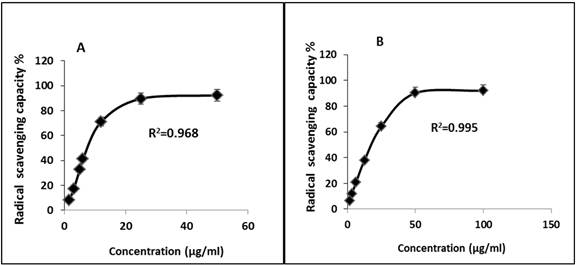
Abstract: Natural metabolites produced by macrofungi are of great interest as potential antioxidant defensive agents to reduce the oxidative damage caused by free radicals. Primarily, phenolic and flavonoid type metabolites have gained major importance due to the strong capacity of scavenging free radicals. The study was mainly focused to investigate the natural antioxidant properties of macrofungi found in Sri Lankan dry zone forest reserves using DPPH radical scavenging assay and to find out the contribution of phenol and flavonoid substances towards their antioxidant capacity. EC50 values of all extracts were below 1.2 mg/ml. Among the analyzed specimens, Phellinus repandus and Inonotus porrectus showed the most potent antioxidant activities having EC50 of 7.91 ± 1.38 µg/ ml and 19.70 ± 0.17 µg/ ml, respectively. Ten fungal forms exhibited EC50 < 300 µg/ ml and eighteen showed a mean values of EC50 in the range of 300-1200 µg/ ml. Further, P. repandus and I. porrectus also exhibited the highest level of total phenols and flavonoids. EC50 values of the species studied were inversely related to the total phenol and flavonoid contents.The analyzed macrofungi specimens exhibited high antioxidant power highlighting their potential as therapeutically useful antioxidant agents. Particularly, P. repandus and I. porrectus could be an important source of novel antioxidant compounds. In addition, phenol and flavonoid compounds largely contribute to the scavenging activity of studied macrofungi.

Keywords: Macrofungi, Antioxidant Activity, Phenol Content, Flavonoid Content,EC50
Read full scientific paper in Frontiers in Environmental Microbiology.

2015年9月20日星期日

Share:Made in the shade

Agroforestry — combining woody plants with agriculture — yields many benefits

BY 
4:18PM, SEPTEMBER 18, 2015
Does this look like a “farm?” These women in Sulawesi, Indonesia, hand pick coffee beans. Shade grown coffee is prized and can command especially high prices.
An Ethiopian coffee farm is “a gorgeous forest with massive, old-growth trees in the canopy and these coffee plants that are a native species growing in theunderstory,” explains Evan Buechley. He’s a graduate student at the University of Utah in Salt Lake City. Buechley studies birds and conservation biology.woman coffee beans
There's a bonus to growing coffee in a traditional way that preserves tall trees — and it's not just for the birds.
Scientists recently found a rich and diverse bird population living in the shade of forested coffee farms. Those farms are in the east African nation of Ethiopia. Ample birdlife is just one of many benefits of this type of farming, called agroforestry. The practice mixes in trees when growing crops or raising livestock.
Combining forest and farm provides habitat for many species of wildlife around the world. The practice can help keep waterways clean and soils healthy. This helps farmers and ranchers. Agroforestry is essential to producing one of the world’s favorite treats — chocolate. And it may even blunt the effects of climate change.
Thanks to growing recognition of its benefits, this ancient farming technique is gaining new attention.
In Ethiopia, agroforestry has been the standard way to grow coffee for more than a thousand years. The coffee plant, Coffea arabica, thrives in the shadows of tall trees. (The word “coffee” comes from the name of an old Ethiopian province named Kaffa.) To farm coffee, growers simply thin the forest of any competing plants. Experts prize the resulting shade-grown coffee beans.
Buechley and his colleagues recently conducted a census of birds on Ethiopia’s farms and in its forests. His team found something special: All the species of birds that could be found in the forest also were living on traditional coffee farms.
Despite its benefits, many farmers are reluctant to adopt agroforestry practices, says Jim Brandle. He is a professor of forestry at the University of Nebraska-Lincoln. People have a difficult time believing it’s worthwhile planting trees on land that could be sown with a profitable crop, he explains. Still, the idea is catching on. India, for example, announced in 2014 that agroforestry would lead its push to add more trees.

Border territory

Long before the technique got its name, humans had used agroforestry to grow plants. The basic idea behind agroforestry is the same, Brandle explains, whether it's in Africa or halfway around the world in the South Pacific. On Hawaii and other tropical islands in the Pacific Ocean, for instance, farmers have a history of cultivating forests filled with coconut, banana, breadfruit and other trees. Agroforestry is also common elsewhere, even in the continental United States.
farming fields
These windbreaks are in North Dakota. The trees protect crops in the fields and reduce the amount of soil eroded by the wind. Those trees also store carbon.
USDA-NRCS
If you travel across America by car, bus or train, you’ll pass a lot of farms. You might see field after field of corn in Indiana, barley in Montana or soybeans in Iowa. In many places, a thin wall of trees will border a field. It’s called a windbreak. Although this looks very different from an Ethiopian coffee farm, windbreaks represent a form of agroforestry.
In fact, windbreaks may be one of the most easily recognizable forms of agroforestry in the United States. Planting trees along the edges of a field interrupts the wind, altering its speed, Brandle explains. Next to a windbreak, it’s a little warmer and less windy. Crops grow better in these sheltered areas. The trees also help to protect the soil from wind erosion.
Another common type of agroforestry in the United States takes place along what are called riparian (Ry-PAIR-ee-un) zones. These are regions along the banks of rivers and streams (ripa is Latin for river bank). To create a buffer — or protected area — farmers plant trees and other types of vegetation here. This vegetation helps limit erosion. The plants also provide food and habitat for birds and other wildlife. And the greenery helps prevent rains from washing sediment, nutrients and pesticides away into nearby streams...

Keep reading:https://student.societyforscience.org/article/made-shade

2015年9月18日星期五

American Journal of Embedded Systems and Applications

American Journal of Embedded Systems and Applications (AJESA) provides a forum for sharing timely and up-to-date publication of scientific research and review articles. The journal publishes original full-length research papers in all areas related to the embedded systems and its applications with emphasis on algorithms, systems, models, compilers, architectures, tools, design methodologies, test and applications.It aims to bring together researchers and practitioners from academia and industry to focus on understanding Embedded Systems and establishing new collaborations in these areas.

ISSN:2376-6069 (Print)
ISSN:2376-6085 (Online)
About This Journal
American Journal of Embedded Systems and Applications is a peer-reviewed, open access, online journal, publishing original research, reports, reviews and commentaries on all areas of embedded systems. Subject areas may include, but are not limited to the following fields:
  • • Application-specific processors
  • • Component and binding models
  • • Embedded computing education
  • • Embedded hardware
  • • Embedded software
  • • Embedded system architecture
  • • Emerging technologies
  • • Hardware co-design
  • • Software co-design
  • • Industrial practices
  • • Integration with business logic
  • • Integration with SOA
  • • Middleware
  • • Networked embedded systems
  • • Policy-based management
  • • Real-time systems
  • • Recent trends
  • • Service-oriented architectures
  • • Testing techniques

2015年9月17日星期四

Watch: Cancer patient receives world’s first 3D printed sternum and ribs


In a novel surgery, surgeons have transplanted the world’s first 3D printed titanium rib cage, NPR reports. A 54-year-old man who lost his sternum and four rib pieces when doctors removed a cancerous tumor was the recipient of the metallic implant, the surgeons describe in the European Journal of Cardio-Thoracic Surgery. Engineers with the Australian company Anatomics used CT scans of the man’s chest to custom design the device before printing it at a government lab. The 3D printing technology is particularly useful in these extreme cases that call for extensive reconstructions, helping craft an implant that “fitted like a glove,” the surgeons say. Such accuracy of fit may help to reduce any potential complications with the transplant. 
(Video Credit: CSIRO)

Story source:http://news.sciencemag.org/sifter/2015/09/watch-cancer-patient-receives-world-s-first-3d-printed-sternum-and-ribs